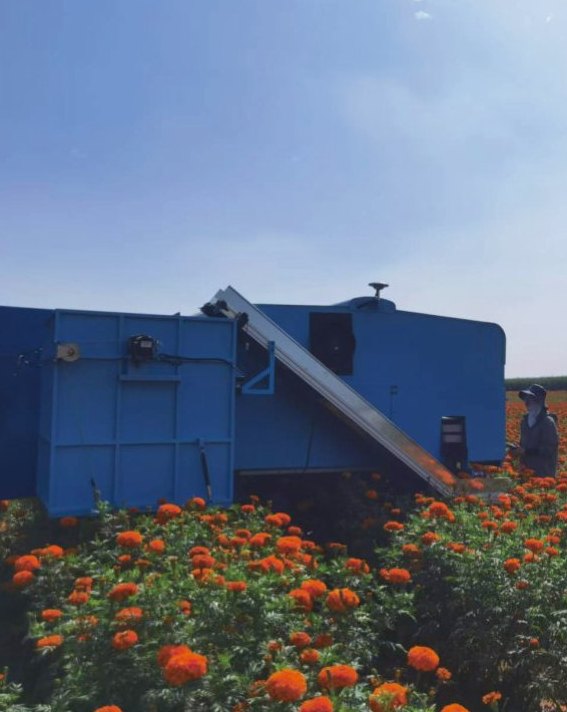
Downward picking
Marigold
4WD, 8 grippers in parallel, automatic transfer and bin change, 24 h through daylight and night.
Pick rate>92%
Cycle5.2 s
One platform. Seventeen harvesting builds. Nine crop families — from marigold and asparagus to lychee, navel orange and kiwifruit. Machines that pick in heat, in glare, and at two in the morning.
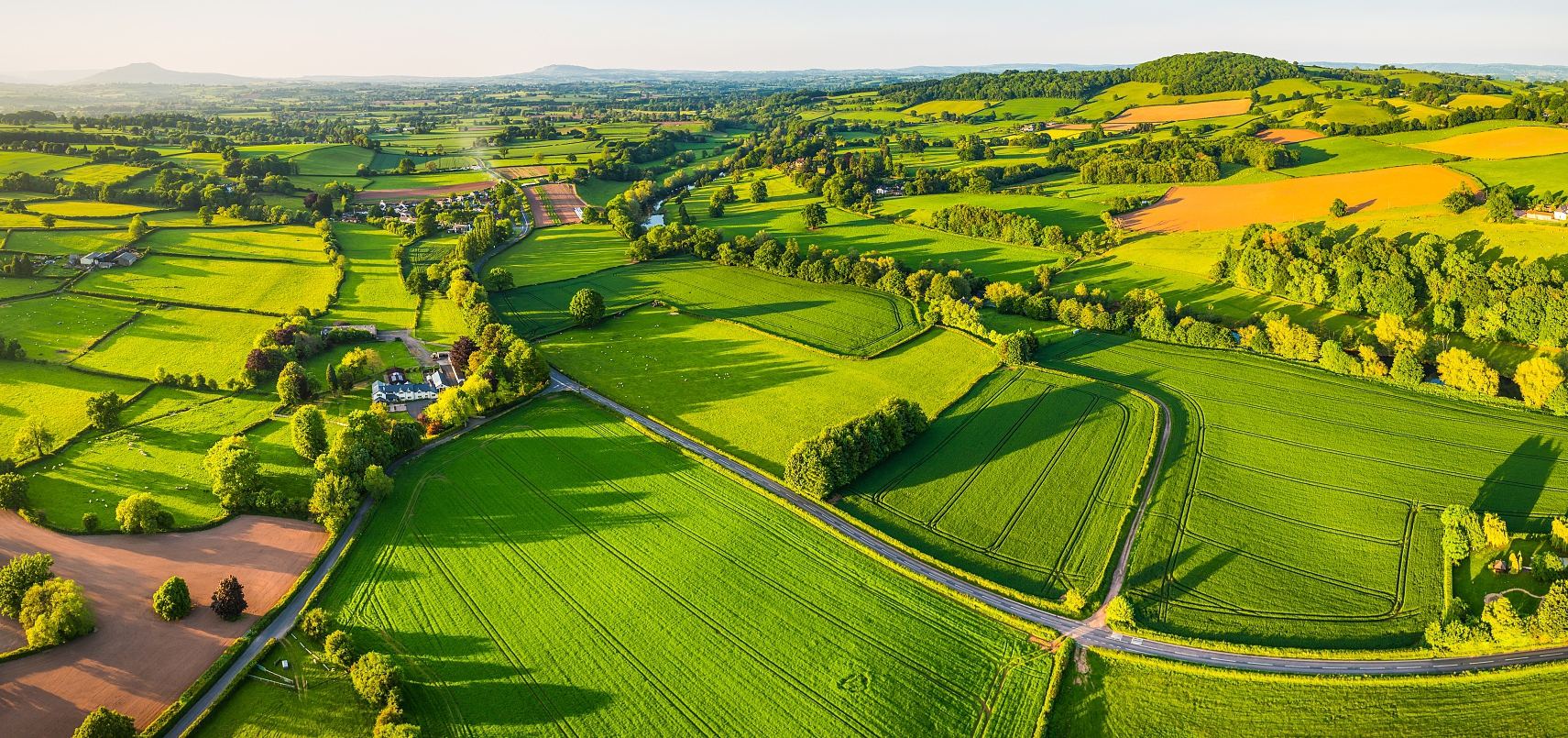
Pomona is the field-robotics brand of Sichuan Jian Xiaomo Technology Co., Ltd., a Chengdu-based manufacturer founded in 2020 that designs, builds and delivers autonomous harvesting robots for fruit, flower and industrial field work. A single control–structure–AI platform carries 17 machine configurations across nine crop families — marigold, asparagus, oil-tea camellia, grape, tomato, cherry tomato, lychee, navel orange and kiwifruit — plus orchard mowing, airfield mowing, solar-panel cleaning and warehouse AGV work. The flagship marigold harvester picks one flower in 5.2 seconds at a recognition-and-pick rate above 92% and under 5% fruit damage, and runs 24 hours through daylight and night. Lychee is sold as a picking service at RMB 0.32 per string, with one operator running five machines. The company holds more than 80 patents, is a certified Chinese National High-Tech Enterprise, and has units working in 16 provinces of China as well as in Spain, Korea and India.
Same chassis family, same sensor stack, same autonomy stack. What changes is the end effector, the gripper count and the bin — so the machine fits the crop instead of the crop fitting the machine.
4WD, 8 grippers in parallel, automatic transfer and bin change, 24 h through daylight and night.
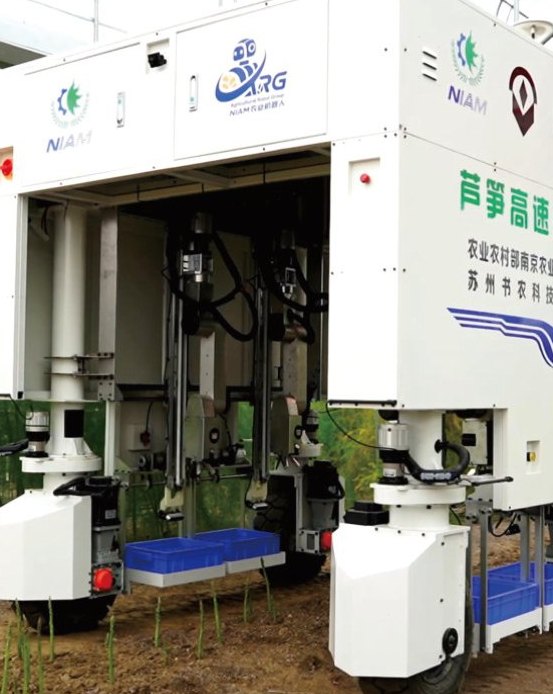
3 arms / 3 grippers, four rotating bins, picks a spear every 5.2 seconds.
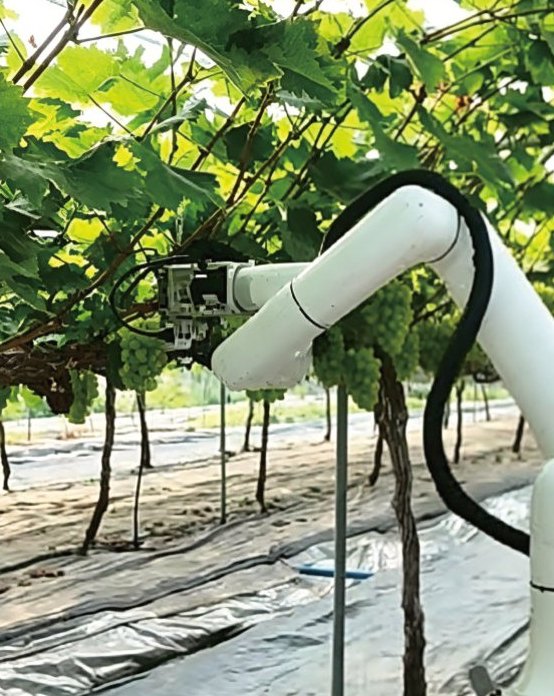
Fits under trellis rows, 3 arms / 3 grippers, 5 km/h autonomous navigation.
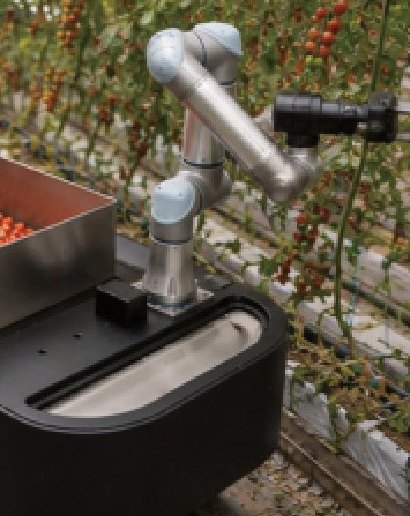
Picks red-ripe fruit only, single fruit with stem left on — meets processor grading. 10-year depreciation, 120-day season.
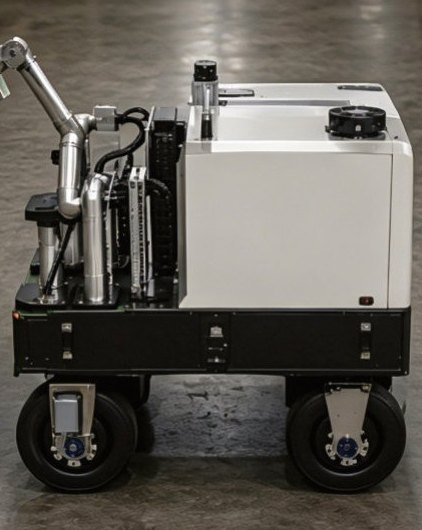
Sold as a picking service at RMB 0.32 per string; one operator runs five machines, 40-day season.
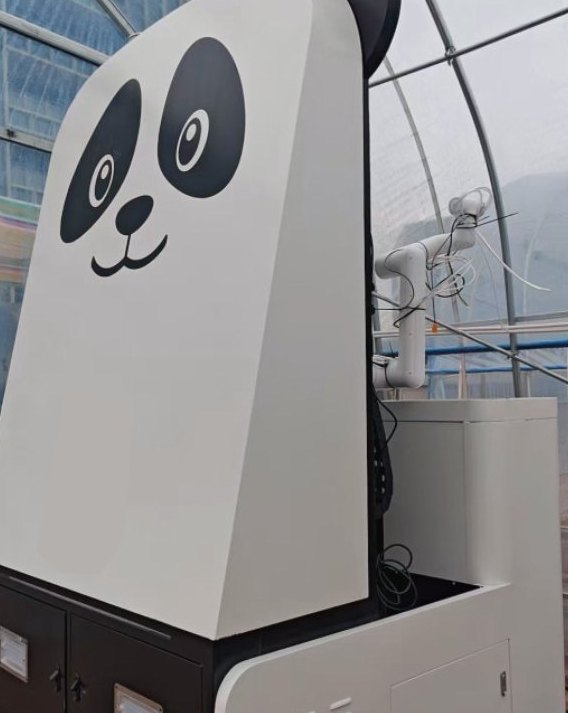
In-house end effector with visual compensation, 2 arms, flexible collection.
| Crop / task | Picking mode | Pick rate | Damage | Cycle | Mass | Working height |
|---|---|---|---|---|---|---|
| Marigold | Downward picking | >92% | <5% | 5.2 s | ≤2000 kg | 0.5–1.5 m |
| Asparagus | Downward picking | >92% | <5% | 5.2 s | 1400 kg | 0.15–0.30 m |
| Oil-tea camellia | Lateral picking | ≥90% | ≤5% | — | ≤800 kg | 0.5–1.5 m |
| Table grape | Lateral picking | >95% | ≤5% | — | ≤800 kg | 0.16–1.6 m |
| Greenhouse tomato | Lateral picking | >92% | ≤3% | — | ≤800 kg | 0.5–1.5 m |
| Cherry tomato | Lateral picking | — | — | ≈2 s | — | 2.5 m |
| Lychee | Lateral picking | — | — | 1.5 s/string | — | — |
| Navel orange | Lateral picking | ≥90% | ≤5% | — | ≤800 kg | 0.5–1.5 m |
| Kiwifruit | Upward picking | ≥90% | ≤5% | — | ≤800 kg | 0.7–2.0 m |
| Warehouse / cold store | Field & industrial work | — | — | — | 5 t payload | 1450 mm lift |
| Airfield / embankment | Field & industrial work | — | — | 0.2–0.33 ha/h | 350 kg | 900 mm cut |
| Orchard inter-row | Field & industrial work | — | — | 0.2–0.33 ha/h | 455 kg | 1 m cut |
| EV charging site | Field & industrial work | — | — | 14 h runtime | 3 kg / arm | 610 mm reach |
| Solar PV plant | Field & industrial work | — | — | 51,840 m²/h | — | — |
| Custom implement carrier | Platform & retrofit | — | — | 10–12 h | 200 kg payload | — |
| Lemon post-harvest | Platform & retrofit | ≥90% | ≤10% | — | ≈2000 kg | — |
| Existing farm machinery | Platform & retrofit | — | — | ≤5 cm RTK | — | — |
Figures are manufacturer data. Final specification, price and delivery are set per contract.
A harvesting robot is not a tractor. It sells where the canopy is structured, the season is long enough to amortise the machine, and someone local can service it. Below is our own ranking — including the crops we will not promise.
| Crop | Fit | Why | Enter first in |
|---|---|---|---|
| Greenhouse tomato (truss, track) | A+ | Fixed rows, controlled light, ≤3% damage, shortest CE path. Two arms in parallel, flexible collection. | NL · BE · PL · HU · RO |
| Asparagus | A | High value per hectare, single spear per cycle, small footprint, an existing paid market in NL and DE. | NL · DE · PL |
| Cherry tomato | A | Single fruit with stem left on, meets processor grading; 120-day season amortises a 10-year machine. | ES · IT · GR · MX |
| Marigold (industrial flower) | A | Contract acreage, 24-hour operation, 8 grippers parallel. 25 machines already sold into a 2,500-mu block. | IN · MX · CN |
| Table grape | B | Fits under trellis rows at 5 km/h, >95% pick rate; needs local pruning and canopy adaptation. | IT · ES · GR |
| Navel orange / citrus | B− | About 70 units delivered in 2026; needs a canopy and slope match, otherwise the damage number moves. | ES · IT · TR |
| Oil-tea camellia | C | A China-specific crop. Real domestic demand, almost no export demand. | CN only |
| Kiwifruit (trellis) | C | The hillside advantage is Chinese terrain; European trellis geometry differs — pilot only. | CN · NZ (pilot) |
| Lychee | C | Sold as a picking service, 40-day season, no overseas market today. | CN only |
Open-field apple, peach and stone fruit: not offered at commercial damage thresholds today. A dealer who wants to test it gets a paid trial, never a product claim. Lab pick rates of 95% and field drop to 85% is the normal gap — we quote the field number.
| Tier 1 — start here | Hungary · Czechia · Slovakia · Romania · Bulgaria · Serbia · Croatia · Poland | One CE market, thin local supply, price-sensitive buyers, and dealer networks that already exist in farm machinery. |
| Tier 2 — fruit volume | Spain · Italy · Greece | Large fruit and vegetable base, expensive labour; Agrobot and Tevel sit at USD 150–250k, which leaves room. |
| Tier 3 — buyers, but crowded | Netherlands · Belgium | Strongest purchasing power, strongest competition; the greenhouse segment is already contested. |
| Tier 4 — pilot | Australia · New Zealand | Very expensive labour, export-oriented horticulture. One unit per region, not a volume market. |
| Caution | United States · Canada · Japan · Korea | UL / EPA and litigation exposure, or heavy localisation — the cost lands before the first order. |
A machine in this class carries field commissioning, a season of hand-holding and five years of spares. It cannot be traded like a pallet of pumps. So Pomona works through one exclusive partner per country, and the partner does the work that cannot be done from Chengdu.
| Structure | The partner does | Pomona does | Commercials |
|---|---|---|---|
| Exclusive country partner | Demo days, installation, first-line service, finance packaging, grower relationships. | Model-specific OEM changes, CE technical file, spares pool, remote diagnostics, second-line engineering. | Resale margin 25–40%. 5–10% where Pomona carries market development. |
| Referral agent | Introduces accounts and closes locally. | Demo support, configuration, quotation, delivery. | 1.5–3% of contract value. |
| Service company (RaaS) | Runs the machine for growers across a region. | Machine supply, season support, spares. | Per hectare or per unit of harvest. |
Exclusive is earned, not granted. First contract is 1–3 units, non-exclusive for 90 days; exclusivity is confirmed after the first season’s uptime and payment record.
Three days down in harvest week is a refund and a dead reference. So the service model is designed before the machine is quoted — and the trial is priced so that nobody has to believe a lab number.
| Wear part | Expected life | Ships from |
|---|---|---|
| Gripper fingers, suction cups | 300–600 h | Chengdu + partner stock |
| Cutting blade / stem shear | 1 season | Partner stock |
| Camera module | 2 seasons | Chengdu |
| Harness and connectors | 3 seasons | Chengdu |
| Battery pack | 4–5 seasons | Chengdu |
One machine. One block. One crop. Paid per season, or rented for the season. At the end you get a report on picked mass, damage and uptime, measured against your own hand-picking baseline on the same block. If you buy, the trial fee is credited. We do not quote “X fruit per hour” on a demonstration table — the table is not the field.
Ask for trial terms →Structure, control and AI are three subsystems that can be reused across crops. Change the crop and you change the end effector and the parameters — not the whole machine.
Self-driving for unstructured fields: headlands, ridges, and plots with no marked rows still get a stable line.
Three arm classes and an in-house polar-coordinate design — see it, pick it. 5.2 s per fruit.
Four-wheel independent drive, zero-radius turn, small footprint — works on hillside terraces, diesel or electric.
In-house sensor stack that sees through strong light, backlight and night, while keeping the machine small.
Four years of on-farm collection, millions of samples across weather and time of day — the base of the pick rate.
In-house 3D spatial positioning, driven down to the mechanical limit so the end effector doesn’t miss.
“Technology that carries the farm, care that protects the harvest.”
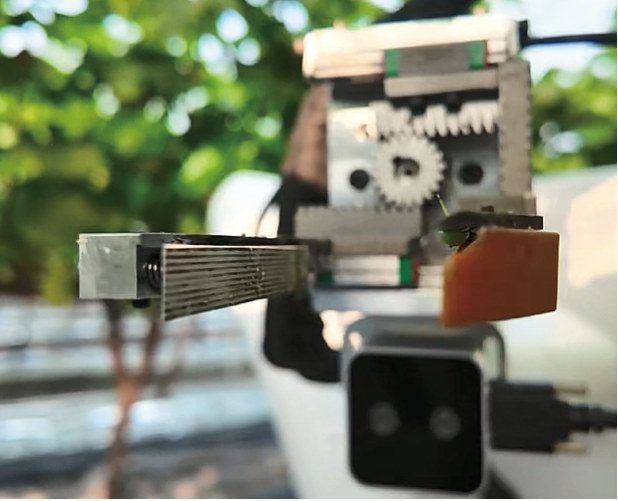
In-house end effectors compensate visually and collect softly — that is the gap between “picked” and “picked at a price”.
Pomona sells two things: the machine, and picking sold by the unit of harvest. The lychee service is the model that has already run in the field — other crops are costed per block and per season.
Basis: two arms working together, 13 h site time per day, less 3 h for tramlining and calibration. Season fit follows the lychee harvest window.
At 1.5 s per string a machine picks about 2,400 strings an hour — roughly 24,000 in a 10-hour picking day, and close to 960,000 strings across a 40-day season. At RMB 0.32 that is about RMB 307,000 of picking value per machine-season. One operator covers five machines. The arithmetic is indicative only; it is not a quote, and does not include transport, fruit quality or local labour rates.
Choose by crop, configure by block: arm count, chassis (wheeled or tracked), bin capacity and end effector. Fits contiguous plots and standardised plantations first; autonomy and automatic picking follow as the field is standardised.
Request a machine quote →Lychee already runs at RMB 0.32 per string. The same model works with a local processor or cooperative as a service company covering a growing region — the right entry point for a first season without capital spend.
Try one season →A BeiDou + GPS RTK autopilot kit (optional), ≤5 cm positioning error, CORS network RTK or a base station: straight lines, path planning, spot work, auto start-stop. Fits a wide range of farm equipment, customisable per model.
Ask about retrofit →2016: a team. 2020: a company. 2022: the first marigold sales order. These are the public milestones — the evidence that a robotics company can actually deliver.
A robotics R&D team starts work on agricultural automation.
Sichuan Jian Xiaomo Technology Co., Ltd. is incorporated in Chengdu. Jasmine-picking demo in August; a jasmine picking service contract signed in December.
Smart unmanned farm project delivered in Qionglai; innovation-competition award the same year.
February: marigold sales order. Intent with Ledar Biotech, a leading lutein processor, covering 140,000 mu. November: National High-Tech Enterprise certification. Mower revenue that year: RMB 3 million.
Marigold service orders reach 20,000 mu; special programmes above RMB 35 million; a 1,200 m² smart-farm site built; Jinbo Award industry-value list.
Marigold orders of RMB 40 million, delivered; second batch of Sci-Tech SMEs registered in May.
25 marigold machines signed with a three-year plan for 40,000 units; intent with Ledar for 500,000+ mu; about 70 navel-orange harvesters delivered in June; 2,000-unit order signed with Spain; revenue forecast RMB 200–300 million.
More than 80 invention, utility and design patents; eight national and provincial recognitions; universities, processors and plantation groups on the same test plots.
Government programmes, campus research and processor supply chains run on the same plots — that is where the field data comes from.
Pomona was the Roman goddess of fruit trees. We build the machines that pick what she grows.
Nine crop families today: marigold, asparagus, oil-tea camellia, grape, greenhouse tomato, cherry tomato, lychee, navel orange and kiwifruit. The same platform also does orchard and airfield mowing, solar-panel cleaning, warehouse AGV work and lemon post-harvest de-bagging.
5.2 seconds per flower for marigold and per spear for asparagus; about 2 seconds per fruit for cherry tomato; 1.5 seconds per string for lychee; above 95% pick rate for table grape.
Under 5% on the standard builds, ≤3% on greenhouse tomato, ≤5% on citrus and kiwifruit. Flexible collection and visual compensation on the in-house end effector are what hold that number down.
Yes. The sensor stack is built for strong light, backlight and night, and the marigold harvester is specified for 24-hour continuous operation. Several builds run 10–12 hours per day on one charge.
Both. Turnkey machines are configured per crop and block; picking is also sold by the string (lychee, RMB 0.32) or per hectare through a local service company; existing machinery can be retrofitted with an RTK autopilot kit.
On the lychee service model, one operator runs five machines. Autonomy handles the driving and the picking; the operator handles supervision, bin changes and refuelling.
Four-wheel independent drive, zero-radius turn and track widths from 50 cm. The camellia build is rated to 25° working slope (40° without rollover risk), the orchard mower to 55° climb, and RTK positioning holds ±5 cm.
For lychee, energy plus maintenance is listed at RMB 30 per day, with five-year depreciation and a 40-day season. For other crops the run cost is costed per block once the configuration is fixed.
16 provinces in China, plus Spain, Korea and India. About 70 navel-orange harvesters were delivered in June 2026, and a 2,000-unit order was signed with Spain.
Send one block — crop, area, region. You get back a configuration, a season calculation and a proposal for a demo at the nearest site. Machines are quoted and delivered per contract.
Give us one block and one crop. We come back with a configuration and a season calculation; once it runs, we talk about volume, service and joint build-out.
Chengdu headquarters. Sales and technical teams operate in 16 provinces of China, and have entered Spain, Korea and India. Field demos are scheduled on the nearest working site.
One block, one crop — crop, area and region is enough
We return a configuration and a season calculation
A demo on the nearest site — see it work before any order
Submitting builds a pre-filled email in your own mail app. No third-party form platform, no data resale.
If your mail app didn’t open, copy the text below to zhangqing@jxsg-tech.com, or call +86 135-5126-8193.